
Best Retractable Awning Fabric Color for Kansas City Sun
Fabrics — June 26, 2026
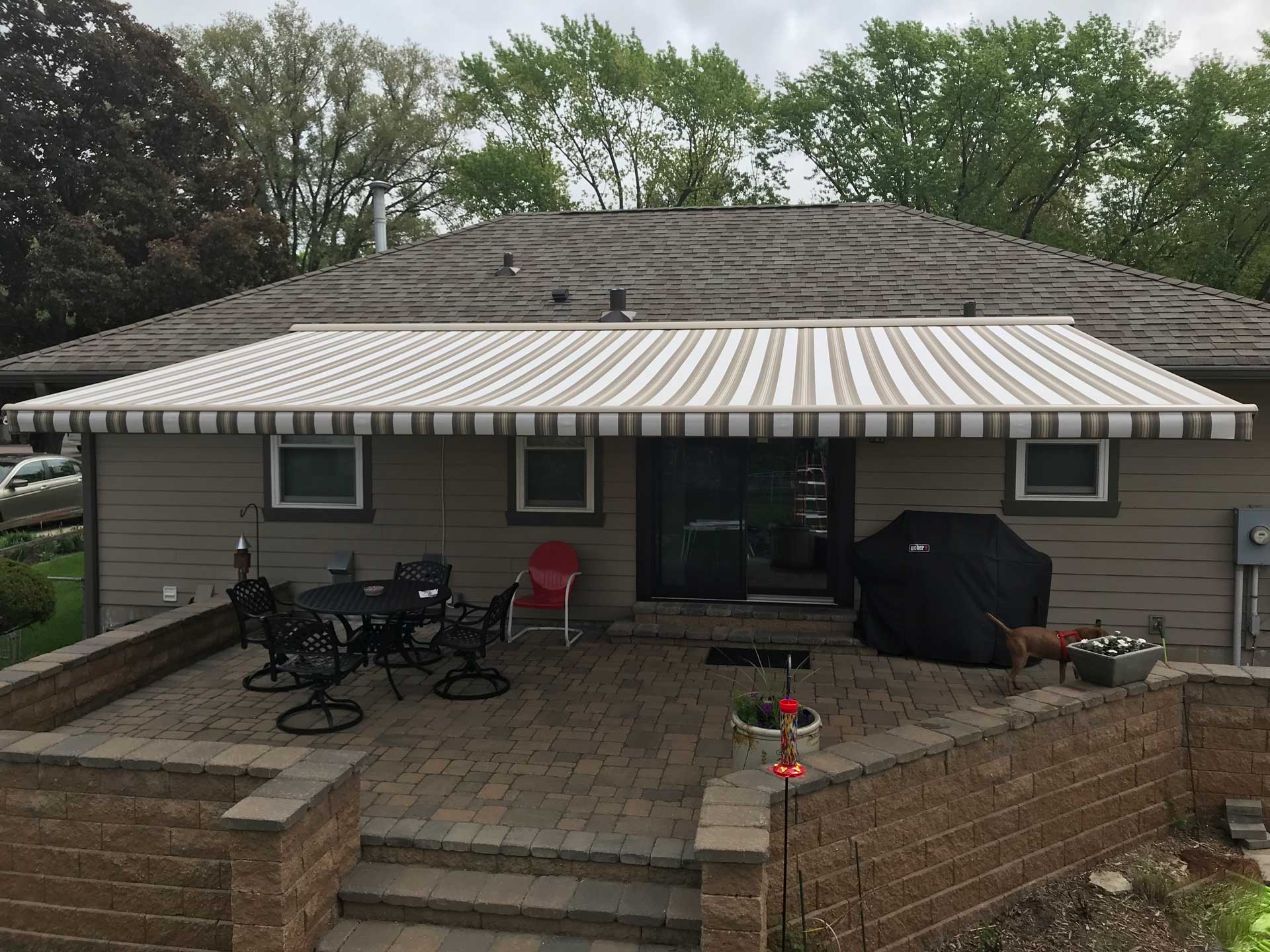
How to pick a solution-dyed acrylic awning color that fights KC's UV, hides oak catkin and sycamore tannin staining, and keeps a west-facing deck cool at 4 p.m.
Best awning fabric color for Kansas City sun
For Kansas City's UV load, the color matters less than the material under it. Every Sunesta awning uses solution-dyed acrylic, where the pigment is locked into the fiber before it's woven rather than printed on the surface. That's why the practical answer is: pick the color you actually want, because solution-dyed acrylic holds its tone through years of Brookside and Hyde Park summers. We've measured the difference on the deck. A printed or vinyl-coated fabric loses its surface color in a few seasons here. A solution-dyed acrylic in the same exposure still reads true.
Mid-tone and patterned fabrics are the most forgiving choice for our metro. A solid cream or pure white shows every speck of pollen and rain spotting, and a deep solid shows water rings after a humid week. A heathered gray, a tan weave, or a multi-tone stripe sits in between and stays presentable between cleanings. We carry 130+ Sunesta colors across solids, stripes, and patterns, and our consultants bring physical samples to your home so you judge them in your own light, not on a screen. You can preview the full range in our awning fabrics collection before you book.
Do dark awning fabrics hold heat
Yes, dark fabrics absorb more solar heat than light ones, and you'll feel it under the awning on a 95-degree July afternoon. A charcoal or deep navy canopy runs warmer underneath than a tan or pearl gray in the same spot. The trade-off is glare and translucency. Light fabrics let more diffuse light through, so the shade feels brighter but can wash out a screened porch. Dark fabrics block more visible light and cut glare hard, which reads as a cooler, dimmer shade even though the fabric itself is hotter to the touch.
Kansas City adds humidity to that equation. When we hit the stretch of mid-90s heat with 70 percent humidity, air movement matters more than the fabric color, because still humid air under any canopy feels heavier. Our read after years on KC decks: go a half-step lighter than your first instinct if afternoon comfort is the priority, and lean darker only when killing glare on a screen or TV matters more than a couple of degrees. A mid-tone is the honest compromise for most patios here.
Light vs dark awning fabric for a west-facing deck
A west-facing deck is the hardest case in Kansas City, because the sun you're fighting is the low, direct, late-afternoon sun that comes in nearly horizontal from 4 p.m. on. That's the projection-at-4-p.m. problem. Color choice on a west deck is really about how the canopy handles low-angle light, and a slightly darker or denser fabric earns its keep here by cutting the orange late-day glare that a pale canopy lets through. If your deck faces due west off the Missouri River bluffs or a Sunset Hill backyard, a mid-to-dark fabric plus a SmartDrop front-drop valance does more than color alone, because the valance drops vertically to block the sun that slides in under the canopy edge.
If the deck faces west but is shaded by mature oaks or a neighboring roofline until late afternoon, you can run a lighter color and let the canopy stay bright most of the day. Match the fabric to your trim and siding so the awning reads as part of the house rather than an add-on, which matters in ARB-reviewed neighborhoods like Mission Hills and the Country Club District. Want us to measure the actual sun angle on your deck before you commit to a color? Request a free in-home measure and we'll bring the full sample fan.
Staining: oak catkins, sycamore tannin, and cicada cast
Kansas City's tree canopy is the real enemy of a clean-looking awning, more than the sun is. Spring oak catkins drop a fine yellow-green dust that settles into any horizontal weave. Sycamore tannins streak rust-brown after rain. And in a Brood XIX cicada year, the cast shells and droppings add a third mess most fabric guides never mention. Solid pale fabrics show all of it. This is the practical case for a stripe or a heathered mid-tone in our metro, because a busier pattern hides seasonal staining between cleanings far better than a flat cream.
Solution-dyed acrylic helps here too, because the same fiber-locked pigment that resists fading also lets you scrub the fabric without lifting color. A mild soap-and-water wash clears most catkin dust and tannin streaking, and a retracted canopy under a SmartCase housing simply doesn't collect the debris in the first place. Color choice and a cassette housing work together: pick a forgiving tone, then keep it out of the catkin season when you're not using it.
When color is the wrong thing to obsess over
Don't agonize over the exact shade if your real problem is glare on a screen, a too-hot west deck, or debris staining, because in each of those cases a structural choice solves more than a color swap does. Glare wants a denser fabric and a front-drop valance. Heat wants air movement and projection. Staining wants a cassette housing and a forgiving pattern. We'd rather talk through the actual deck than sell you on a trendy color that won't fix the thing bothering you. The fabric color is the finish on a decision that starts with how your Sunesta retractable awning is built and projected.