
Motorized Garage Door Screens for Kansas City
You want the garage door open on a hot KC afternoon and you want the bugs, the pollen, and the sycamore debris to stay outside. A motorized garage door screen does exactly that: the Sentry solar screen drops down over the open bay at the push of a button, seals along both edges, then rolls back up out of sight when you're done. We measure, fabricate, and install the Sentry over standard single and double garage bays across the Kansas City metro, and every job is handled by our own Sunesta-Certified Installers. Call 913-355-1236 for a free on-site measure of your opening.
Screen Doors for Garage Doors, Done With a Motorized Sentry

A garage screen is a second layer that lives behind your existing overhead door. Your steel or wood garage door still opens and closes the way it always has. The Sentry motorized vertical solar screen mounts inside the opening and drops down independently, so you can run the garage door up, leave the screen down, and work in a ventilated bay without the door track in your way. This is the Sunesta Sentry, the same motorized solar screen we install on decks, porches, and windows, configured for a garage opening. Sunesta pioneered retractable shade engineering back in 1981, and the Sentry brings that same push-button control to the one room most KC homeowners never think to screen.
What a Garage Door Screen Actually Does
The Sentry runs on a Somfy motor with a handheld RTS remote, so the screen goes up and down without you touching it. When it's down, a captured edge rail on each side holds the fabric firm and a fine-tooth zipper welded to the fabric rides the track, which keeps the screen from binding and keeps a tight seal along both edges. That seal is the whole point in a garage: it's what stops mosquitos, wasps, oak catkins, and cicada cast from drifting into the bay while you've got the door up. Because it's a solar screen fabric, it also cuts the glare and heat load coming through a wide-open south or west opening, which matters when you're trying to work in a garage in July.
- Push-Button Motorized — A Somfy motor and RTS remote raise and lower the screen on command. No hand cranks, no lifting a heavy screen panel, no track to trip over. Leave the garage door open and drop the screen alone.
- Sealed on Both Edges — A captured edge rail and a welded fine-tooth zipper keep the fabric tight to the track down both sides, so bugs, pollen, and debris stay outside the bay instead of drifting in through the gaps.
- Rolls Up Out of Sight — When you're done, the screen retracts fully into its housing at the top of the opening. The garage looks exactly like it did before, and the fabric is protected from weather when it's not in use.
Sizing: How Wide Can a Garage Screen Be?

The Sentry is available in widths up to 18 feet and drops up to 12 feet, and every unit is custom-built to the inch. A standard single garage bay runs about 8 to 9 feet wide and a standard double runs about 16 feet, so a single Sentry covers a single bay easily and reaches across most standard double openings in one unit. For a wider or non-standard opening, we measure the actual rough opening on-site and spec the screen to it, or split a very wide opening across more than one unit if that's the cleaner install. Height is rarely the limiting factor on a garage: most residential doors sit well under the 12-foot drop. The one thing we won't do is eyeball it, because a garage screen that doesn't seal at the edges isn't doing its job. Every measure happens on-site before we quote.
Built for Kansas City Garages and Workshops
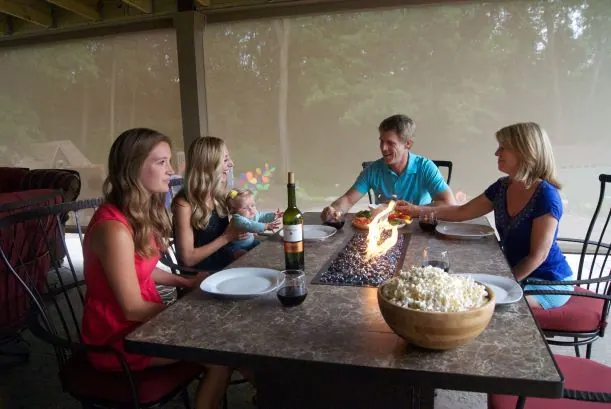
KC summers make a closed garage brutal to work in and an open one a magnet for bugs. Highs sit near 95°F with humidity around 70% for weeks, and the person who spends real time in the garage, woodworking, wrenching, or just wanting airflow, ends up choosing between heat and mosquitos. A garage screen ends that trade-off: door up for the cross-breeze, screen down for the seal. It also handles the specific mess KC throws at an open bay. Oak catkins and heavy pollen coat everything in May, sycamore tannins stain, and the Brood XIX cicada cast piles up on flat surfaces. A sealed screen keeps that out of your tools and off your projects. When the spring gust fronts roll through at 50-plus mph, the screen isn't a structural enclosure, so on an exposed opening we'll talk through whether an automatic wind sensor makes sense to retract it before the wind loads the fabric.
Does a Retractable Garage Screen Keep Bugs Out?
Yes, when it's sealed correctly, and that's the part that separates the Sentry from a bargain kit. The captured edge rail and the welded zipper track are what hold the fabric tight against both sides of the opening, so there's no gap for mosquitos and wasps to slip through the way they do around a loose screen panel hung on magnets or velcro. The floating track keeps that seal firm as the screen goes up and down. We'll be straight about the limits, though: the Sentry is a solar and wind screen first. On a standard door opening it does an excellent job holding out the bugs and debris a KC garage attracts, but it is not a hermetic insect enclosure and it is not a security barrier. If you need a locked, weather-tight, all-season room, that's a garage conversion, not a screen, and we'll tell you so.
When a Garage Screen Is the Wrong Call

We'd rather lose the sale than sell you the wrong product. If what you actually want is a conditioned, lockable, year-round room, a screen won't get you there and you should be pricing a garage conversion instead. If your opening sits on a true bluff edge with sustained high wind rather than the occasional gust, a retractable fabric screen will spend more time retracted than down and you won't get much use out of it. And if you're only in the garage a few minutes a day to pull the car in and out, a screen is money you don't need to spend. The Sentry earns its keep for the person who genuinely uses the garage as a shop or hangout and wants the door open for hours at a time.
Fabric and Frame Colors to Match Your Home
The Sentry comes in a range of solution-dyed acrylic screen fabrics and multiple frame colors, so the screen and its housing blend into the garage face instead of forcing a mismatched white box onto a brick or Hardie exterior. Solution-dyed acrylic is the same Sunbrella-grade material we use across the awning line: it resists the fading that KC's long sun hours cause and sheds the pollen and tannins that stain lesser fabrics. Different screen densities are available depending on whether you're prioritizing view-through, glare control, or a tighter weave against insects, and we'll walk you through the options during the in-home visit.
Installed by Sunesta-Certified Installers, Not Subcontractors
Every garage screen we sell is installed by Sunesta-Certified Installers who are our own employees, never subcontractors. On an existing opening we set the housing and side rails to the actual rough opening and, where the porch or garage ceiling detail calls for it, fasten to a 2x6 ceiling-joist nailer on 16-inch centers rather than into trim. Mounting substrate matters: pre-1970 KC garages with 1x cedar fascia get through-bolted backing, brick veneer takes wedge anchors into solid courses rather than mortar joints, and newer Johnson County stock in Overland Park and Olathe is typically engineered rim board or Hardie. Lead time from order to installation runs four to six weeks because each Sentry is custom-built to your opening. The technician walks you through operating the screen and the remote before sign-off.
Frequently Asked Questions
How wide can a garage screen be?
The Sentry is available in widths up to 18 feet and drops up to 12 feet, and each unit is custom-built to the inch. A standard single bay (about 8 to 9 feet) is covered easily by one unit, and a single Sentry reaches across most standard 16-foot double openings as well. For a wider or non-standard opening we measure the rough opening on-site and either spec a single wider unit or split it across more than one, whichever gives the cleaner install and a proper edge seal.
Does a retractable garage screen keep bugs out?
Yes, when it's sealed on both edges, which the Sentry is. A captured edge rail plus a welded fine-tooth zipper riding a floating track holds the fabric tight to the opening, so there's no gap for mosquitos and wasps the way there is around loose magnetic or velcro panels. It's a solar and wind screen first, so it holds out the bugs and debris a KC garage attracts but is not a hermetic insect enclosure or a security barrier.
Is the garage screen motorized?
Yes. The Sentry runs on a Somfy motor with a handheld RTS remote, so the screen raises and lowers at the push of a button independently of your overhead garage door. You can run the garage door up and drop just the screen, then roll the screen back up out of sight when you're done. No hand cranks and no heavy panel to lift.
How much does a garage door screen cost in Kansas City?
Price depends on the opening width, the drop, the fabric and frame color, and options like an automatic wind sensor, so we quote every garage screen after a free on-site measure rather than posting a single number. A single-bay Sentry and a wide double-bay unit sit at very different points. Ask about current specials and financing during the in-home visit. Call 913-355-1236 or request a free quote to get a firm figure for your opening.
Related Services
- The Sentry Motorized Solar Screen for Garages
- Screen Fabrics
- Retractable Patio Covers
- Current Specials
- Measure My Garage Opening for a Sentry Screen
- Browse All Sunesta of Kansas City Services
- Garage Door Screens in Kansas City, MO
- Garage Door Screens in Overland Park, KS
- Garage Door Screens in Olathe, KS